Stairs turns your messy 1:1 notes into structured records, rolling follow-ups and goals you actually review — so nothing about your people falls through the cracks.

Notes live in five places — a notebook, two apps, an email to yourself. So every 1:1 starts from zero, and your best people notice.
You said you'd chase the promotion criteria three weeks ago. It's nowhere. Trust is built on small commitments — and lost the same way.
Goals get written once and reviewed at appraisal time, when it's too late to change the outcome for anyone.
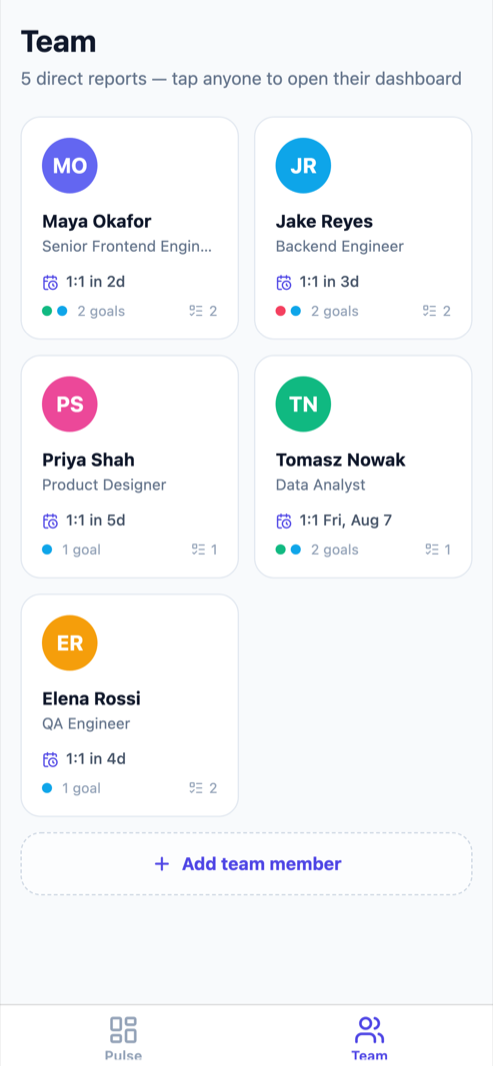
Every direct report gets a full dashboard: 1:1s, follow-ups, goals, personal context and development — kept current by the meetings you're already having.
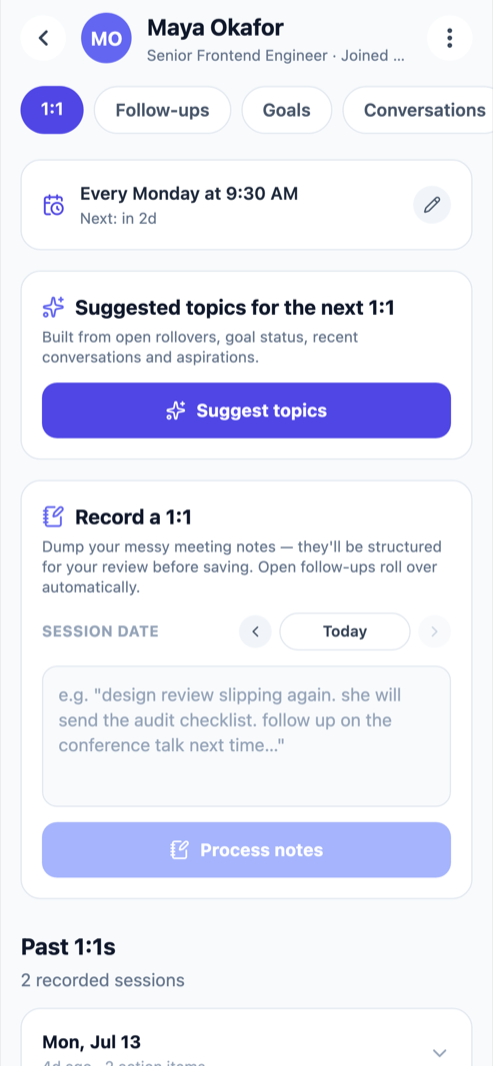
Type scrappy notes while you talk — half-sentences, typos, all of it. Stairs' AI structures them into action items, discussion points and follow-ups for you to review before saving.

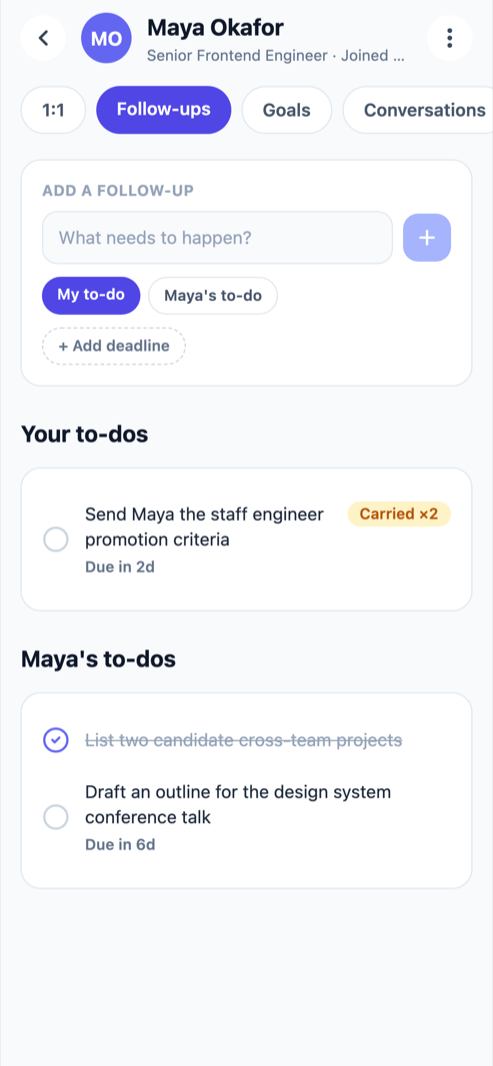
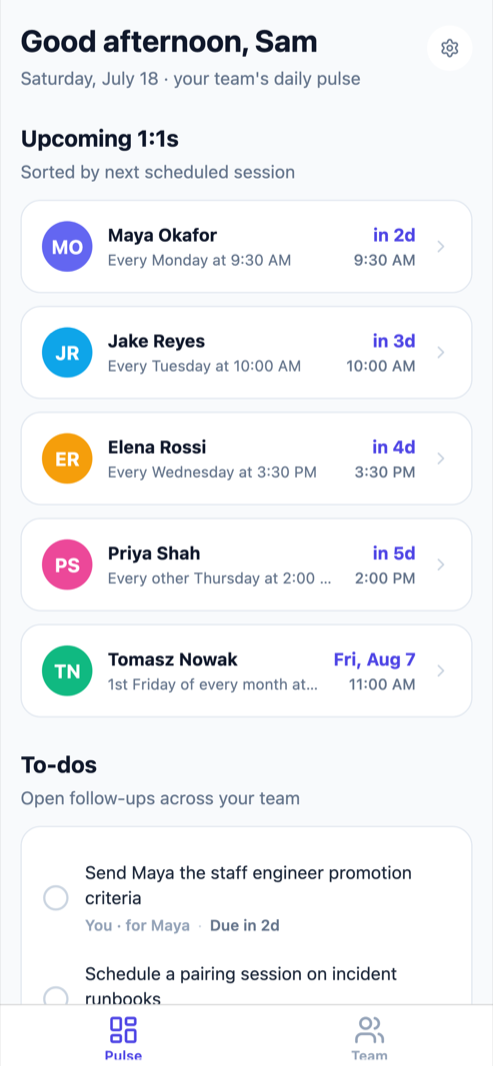
Every commitment — yours and theirs — is tracked by owner. Record the next 1:1 and any still-open item rolls forward automatically, wearing its history.

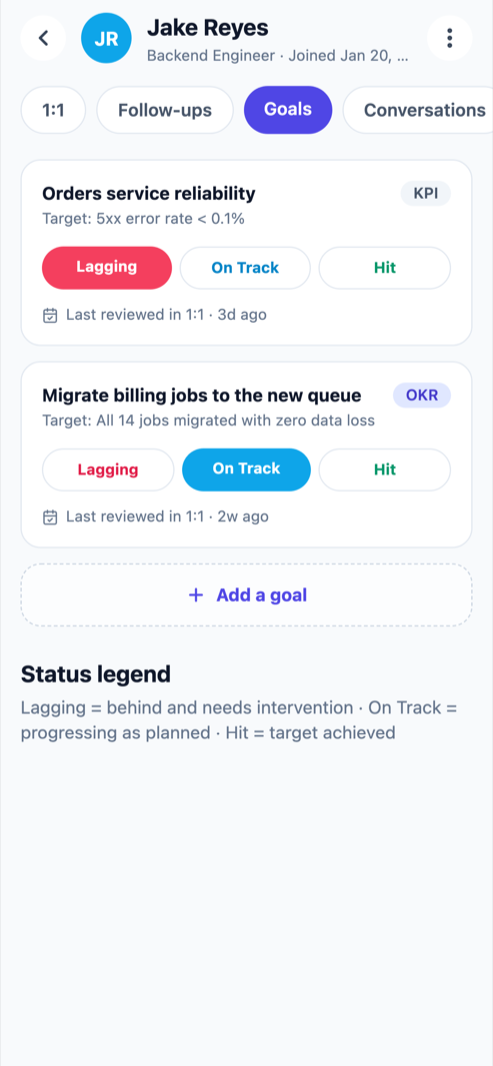
KPIs and OKRs per person, each one either Lagging, On Track or Hit. Change it in one tap during the conversation — not in a form after it.

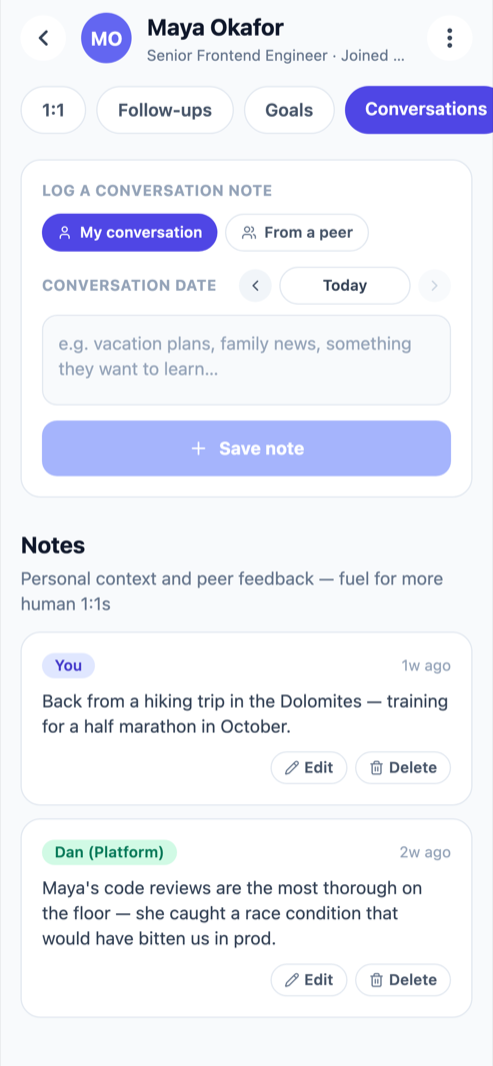
The marathon they're training for. The puppy. The praise a peer passed on in the corridor. Log it in ten seconds — it's gold in the next 1:1, and in their next review.

Pulse opens your day with upcoming 1:1s and every open follow-up across the team. The Team grid shows each person's goal health and open items at a glance.

Stairs doesn't add a process. It catches the one you already have.
Have the conversation. Type messy notes straight into Stairs — or paste them in afterwards. No template, no structure required.
AI turns the dump into action items, discussion points and follow-ups. You review, tweak, save. Open follow-ups roll forward automatically.
Suggested topics, goal status, carried items and the human context — on one screen, in the lift on the way to the meeting.
My 1:1s used to be status updates. Now I open Stairs in the corridor and walk in with three things worth talking about.
The rollover badge did more for my follow-through than any productivity system I've tried. Carried ×3 stings — that's the point.
At appraisal time I had a year of structured 1:1s, goal history and peer feedback per person. Writing reviews took an evening, not a week.
Illustrative quotes drawn from early-access research personas — real manager quotes land with the public launch.
£0
£7 / month
£6 / manager / month
Launch pricing — final plans confirmed at release. Every tier keeps your notes private to you.
No. Stairs is your private management notebook — it doesn't report to HR, doesn't run appraisal workflows, and nobody above or below you sees it. It makes you better at the part of the job that happens in conversations.
Only you. Your notes, follow-ups and goals are scoped to your account — not your company, not your team, not your own manager. You can delete your account and everything in it at any time.
Less than the workaround it replaces. Notes are typed during the meeting you're already in; the AI structures them in seconds; logging a casual note takes about ten. Most managers spend under five minutes a day in Stairs.
It feeds it. When appraisal season arrives you'll have a year of structured 1:1s, goal history and peer feedback per person — the raw material your official process always asks for and never helps you collect.
Stairs is in private beta now, launching on the App Store and Google Play in 2026. Want in early? Say hello at hello@stairshq.app.
Not because of a framework. Because you kept your word, knew their goals, and remembered the marathon.
Early access: hello@stairshq.app